Friday, September 14, 2012

When you have an itch, what is happening under your skin?

Skin Problems Image Gallery
The average human body is covered by about 20 square feet (2 square meters) of skin. Skin is the only organ that is constantly exposed to potential irritation. And, with so many things coming into contact with your skin daily, you're bound to get an itch or two. Serious itching can be caused by allergies, disease, emotions and infections, but let's take a look at what causes the common itches that aggravate you everyday.
Itching, also known as pruritus, starts with some kind of external stimuli, including bugs, dust, clothing fibers and hair. Like tickling, itching is a built-in defense mechanism that alerts your body to the potential of being harmed. In this case, it might be the potential of being bit by a bug.
When the stimuli lands on your skin, it may not bother you at first, but soon it will begin to rub back and forth across your skin. Once the hair or dust scratches your skin's surface layer, receptors in the dermis of the skin will become irritated. In a split second, these receptors send a signal through fibers in the skin to your spinal cord and then up to the cerebral cortex in your brain.
The same fibers that send itching signals are also used to send pain signals to the brain, which once led some scientists to believe that itching was a form of light pain. That notion has since been dispelled by research, which showed that pain and itching elicit opposite responses. Pain causes us to withdraw and itching causes us to scratch.
As soon as we feel an itch, our first natural response is to scratch the spot of the itch with our fingernails. The reason for this response is simple -- we want to remove the irritant as soon as possible. Once you've scratched the area of irritation, you are likely to feel some relief. When your brain realizes that you've scratched away the irritant, the signal being sent to your brain that you have an itch is interrupted and therefore no longer recognized by the brain.
Even if you don't remove the irritant, scratching will at least cause pain and divert your attention away from the itching. The irritant that caused the itching is very small, maybe only a few microns in length, so it disturbs only a few nerve endings. When you use your fingernail to scratch the spot where the irritant is, you not only remove the irritant but you irritate a lot more nerve endings than the irritant.

Related Articles:-  Top 10 Tips for Stopping Underarm Sweating
                             10 Home Remedies for Dry Hair
                             Top 5 Foods for Beautiful Skin
                             Skin-Saving Tips That Can Change Your Complexion

Thursday, September 13, 2012

Top 10 Tips for Stopping Underarm Sweating


It's your first day on the job and you've taken every precaution to make sure it goes well. Good night's sleep? Check. Balanced breakfast? Check. Clean, pressed shirt? Check. But by the time you reach the office to meet your new coworkers, a persistent enemy overshadows your ambitions: sweaty armpits. Two wet circles are forming under your arms and spreading -- before you can even settle in at your new desk.
Sweating is a natural process that helps regulate the body's internal temperature, especially during exercise or hot weather. As sweat evaporates from the surface of your skin, it removes excess heat and helps to cool the body. Unfortunately, this natural function is sometimes complicated by medical conditions that cause excessive sweating. Excessive sweating also can be driven by emotion or special circumstances: If you've ever soaked your shirt under the arms while making a presentation to a group or meeting your future in-laws, you've experienced situational sweating.
With more than 2 million sweat glands located throughout the human body, why does sweat seem to primarily occur underneath the arms? The apocrine glands, which are particularly efficient sweat-producers, are located in the armpits. The sweat produced by these glands contains proteins and fatty acids that make it thicker and give it a milky or yellowish color. That's why underarm stains on clothing appear to have a yellow tint.
Although sweat itself is odorless, when bacteria on the skin and hair metabolize the proteins and fatty acids in sweat, they produce an unpleasant scent. Preventing and controlling underarm sweat is important to good hygiene, comfort and your social life. Fortunately, there are several ways to prevent or minimize this condition, as well as the wetness and odor that accompany it.

Related E-Books :-*  Kill Sweat No Sweat 
                              * Sweat Free In 14 Days 
                              * Cure My Sweaty Feet 

Related Articles:-  10 Home Remedies for Dry Hair
                             Top 5 Foods for Beautiful Skin
                             How to Find the Right Skin Moisturizer
                             

10 Home Remedies for Dry Hair

 
Oily hair is a drag, but dry hair is no picnic, either. Dry hair is dull hair, and it looks the same after you wash it as it did before. Everyone has bad hair days, but with dry hair you may have those days more often than not.
Along with dry hair, you may also have a dandruff problem. Although it's more often a condition associated with oily hair, people with dry hair get dandruff, too. Common dandruff is simply a layer of skin shedding from your scalp. When the skin cells get trapped on your scalp by your hair and clump together, you have dandruff. And dandruff can make your hair look dull.
Dry hair can result from external factors, such as exposure to harsh chemicals, or from internal causes, such as an illness. These are the primary external factors for those lackluster locks:
  • Harsh shampoo
  • Shampooing too often
  • Hair dye
  • Hair perms
  • Chlorine in swimming pools and hot tubs
  • Overuse of the blow dryer or curling iron
  • Too much exposure to sun and wind
  • High mineral content in local water supplies
External factors are easy to remedy. You just need to be careful about how you treat your hair, cutting back on activities that cause it to become dry. Switch products. Wear a cap when swimming. Cover your head when you're outside in the sun for prolonged periods. And use the kitchen cures in this profile.
Internal factors, though, don't have quite such a quick fix. Internal factors that cause dry hair include:
  • Cancer treatment
  • Certain medications
  • Nutritional deficiency
  • Prolonged illness
­Before you start to panic, go to the next page and read all the simple home remedies for dry hair. Chances are you'll find something that will put the luster back in your locks.
­ This information is solely for informational purposes. IT IS NOT INTENDED TO PROVIDE MEDICAL ADVICE. Neither the Editors of Consumer Guide (R), Publications International, Ltd., the author nor publisher take responsibility for any possible consequences from any treatment, procedure, exercise, dietary modification, action or application of medication which results from reading or following the information contained in this information. The publication of this information does not constitute the practice of medicine, and this information does not replace the advice of your physician or other health care provider. Before undertaking any course of treatment, the reader must seek the advice of their physician or other health care provider.

Related E- books :- Hair Loss Treatment Super Formula Revealed
                               Natural Hair Methods - #1 Learn At Home Natural Hair Course
                               Herbal Hair Regrowth - Ancient Indian Hair Loss Herbal Treatment

Related Articles :- Top 5 How often should you wash your hair? 
                             Foods for Beautiful Skin 
                             Skin-Saving Tips That Can Change Your Complexion
                              Are Your Pores Too Big?
                            

Top 5 Foods for Beautiful Skin

With people all over the globe spending billions of dollars on skin-care products every year, you'd think cosmetics companies had replicated the fountain of youth in the laboratory. In fact, skin creams have gotten more and more expensive and less and less based on real science. According to most experts who aren't hawking half-ounce jars of $200 youth serum, the science behind skin care is simpler than most of us think.
As with most health benefits, it comes down to lifestyle, rather than how much you can afford to spend on products. The things you can do to beautify your skin are remarkably similar to what you can do to strengthen your heart, control your weight, lift your mood and live longer and better: Get regular exercise, sleep enough and eat well. Of course, what you can eat to improve your skin tone, texture, evenness and clarity might be different from what you eat to avoid, say, heart disease.
So what are we looking at when it comes to a beautiful-skin diet? In this article, we'll find out what you want to throw in your shopping cart to improve your skin, why those foods work on traits like smoothness and tone, and whether skin-healthy foods are, in fact, different from the foods you'd eat to promote overall health.
First up: You may not like the smell, but you'll love the smoothness…

 Related Articles:-  How often should you wash your hair?
                              How to Find the Right Skin Moisturizer
                               Where do Your Dark Spots Come From?

How often should you wash your hair?


You've had your sebaceous glands for some time now -- for your entire life, actually. They began to appear beneath your skin during your fourth month in the womb and are found in their highest concentration along your scalp and face, although they are found everywhere on your body except for the palms of your hands and the soles of your feet.
These glands are usually connected to an individual hair follicle (except on hairless places like your eyelids and lips, where they work alone). Now that you know what they are and how they formed, you might want to know what they do. Sebaceous glands are responsible for secreting sebum, the natural oils that moisturize and waterproof your skin and hair. Deep in the skin's dermal layer, specialized secretory cells that absorb fats from the body enter the sebaceous gland and disintegrate. At this point, these cells become sebum. The sebum is expressed into the lumen (shaft) of the hair follicle, where it's excreted up to the skin's outer layer, the stratum corneum. In other words, your body burps excreted fats and cellular debris onto your skin and hair.
No wonder we use shampoo.
As gross as it sounds, it provides a necessary function. As we've seen, sebum waterproofs and moisturizes your skin and hair. Without this stuff, the skin can dry and shed prematurely, leaving thriving cells exposed to the elements. But isn't allowing sebum to accumulate on our hair and skin the same as being unwashed and oily? In modern Western culture, it certainly is.
Our bathing and hair washing routines are based on a strange system of depleting the skin and hair of their natural oils by lathering up with soap and shampoo and then replenishing them with moisturizers and conditioners. We carry out this (usually) daily ritual for a couple of reasons: By Western standards, the appearance of oily, unwashed hair is generally unacceptable -- and it just feels kind of gross to go without a bath or shower for more than a couple of days. Secondly, these natural oils can lead skin conditions like acne vulgaris, where sebum becomes backed up in the hair follicles, creating a smorgasbord for bacteria, which break the fats into fatty acids. These create an allergic reaction that presents itself as acne.

For more information about hair washing, read Healthy Hair Tips But if there are benefits and drawbacks to both washing and not washing your hair, it seems like there's a balance to be struck. How often should you wash your hair, exactly?

Related Articles :- * Skin-Saving Tips That Can Change Your Complexion
                             * Are Your Pores Too Big?
                             * Hair Beauty Tip Long Wavy Hairstyles
                             *How to grow hair back

Monday, September 10, 2012

How to Find the Right Skin Moisturizer


Feel overwhelmed when you want to buy skin moisturizer for your dry skin? That’s no surprise, as there are dozens to choose from at the drugstore and hundreds more at high-end cosmetics and department stores — creams, lotions, ointments, some with sunscreen, others with an exfoliant. Choices range from the basic $1.50 jar of petroleum jelly to a $500 five-ounce tub of designer skin moisturizer. And all the options in between can make your head spin.
While choosing the right skin moisturizer may seem confusing, it’s actually very simple if you follow a few guidelines, says dermatologist Monica Halem, MD, of ColumbiaDoctors Eastside in New York City. Dr. Halem’s first rule of thumb? Don’t spend too much money.
How a Skin Moisturizer Works
Cleansers and moisturizers are the most important skin products, particularly for softening dry skin. A skin moisturizer works by sealing moisture into the outer layer of the skin and by pulling moisture from the inner layers of skin to the outer layer.
Key ingredients that seal in moisture are petrolatum, mineral oil, lanolin, and dimethicone. Glycerin, propylene glycol, proteins, urea, and vitamins help attract water into the outer layer of the skin.
Some skin moisturizers also contain an alpha hydroxy acid (AHA), which exfoliates dead skin, says Francesca Fusco, MD, assistant clinical professor of dermatology at Mount Sinai School of Medicine in New York City and a spokeswoman for the Skin Cancer Foundation. AHAs are a good choice if you have very dry skin.
Finding the Skin Moisturizer For You
It may take some trial and error, Halem says, so be patient. Follow these guidelines as you shop and, if you’re not getting the results you want, try a new one the next time:
  • Note the first five ingredients. Look for common active ingredients, such as lanolin, glycerin, or petrolatum, Dr. Fusco says. Glycerin is less likely than lanolin to cause an allergic reaction, she says. She also recommends picking a moisturizer that’s made by a reputable company.
  • Go for added sunscreen. Protecting your skin from harmful sun damage is one of the best things you can do to keep your skin looking young, so buy a moisturizer with a sun protection factor of at least 30. You’ll have to do some searching, but more companies are offering face and body moisturizers with sunscreen, Halem says.
  • Make it skin-type appropriate. The skin on your face is thinner and more sensitive, so it’s a good idea to use a different moisturizer on your face than you do on your body, Fusco says and recommends buying one that’s labeled “non-comedogenic” because it won’t clog your pores. Of course, choose one that’s right for your skin type. If you know you have sensitive skin, it’s always a good idea to look for a moisturizer labeled hypoallergenic. If you have oily skin, go with a light, oil-free moisturizer. If you have dry skin, get something richer. And if you have combination skin, go with a lighter moisturizer for your whole face and dot drier areas with a heavier cream, Fusco says. Keep in mind that you may need a lighter lotion in the summer, and a cream or ointment in the winter.
  • Consider using a moisturizer with retinol before bed. Retinol is vitamin A for your skin, Halem says. It works by increasing the speed at which your skin cells turn over. You can find it over the counter or by prescription, but use it carefully as it may cause a skin irritation, red skin, or dry skin.
Relief by Prescription
If your skin is very dry, consider a prescription moisturizer. Prescription moisturizers contain the AHA lactic acid, which softens the top layer of your skin and can do a better job if over-the-counter moisturizers aren’t working for you, Fusco says. AHAs such as lactic acid and glycolic acid can cause an allergic reaction in some people. Tell your doctor if you experience burning, irritation, red skin, itching, or a rash.
Another prescription option is a barrier cream, which contains humectants that hold on to moisture longer, Fusco says. Barrier creams penetrate a little deeper than standard moisturizers, she adds.
When to Moisturize
Once you find the right product, moisturize every day and you’ll go a long way toward preventing dry skin and even camouflaging wrinkles. While a skin moisturizer can’t get rid of wrinkles — because wrinkles begin much deeper in the skin due to collagen loss — it can plump up the skin and minimize their appearance, Halem says.
Whichever moisturizer you choose, it will work better if you apply it to damp skin. Think about a sponge that’s dried out, Fusco says. If you put moisturizer on it, it won’t go anywhere. But if you soak the sponge in water and coat it with moisturizer, the sponge will absorb it. Your skin works the same way, happily lapping it up.
For more about skin read  Naturally Skinsational ~ Rejuvenating Skin Care Recipes

Related Articles:- *  Skin-Saving Tips That Can Change Your Complexion
                           * Are Your Pores Too Big?
                           *  Where do Your Dark Spots Come From?
                           *Hair Beauty Tip Long Wavy Hairstyles

Skin-Saving Tips That Can Change Your Complexion


Achieving perfect skin is—as a beauty editor—one of my goals in life. And with all the knowledge, products, and time that a girl could need, it’s not only a wish—it’s my responsibility to ensure that my complexion stays blemish-free, luminous, and hydrated. But perfection is unattainable, even with all the help in the world. What I do have is the best skin I can hope for, with a little help. Skin that I’m proud to show off with just a tinted moisturizer. Skin that tells a story of care, maintenance, and skin that loves to share my product knowledge and expert tips. I’m always asked how I keep my face looking so clear (lots of work!) and which tips I’ve picked up over the years. From dermatologists to nutritionists and facialists to makeup artists, everyone has their two cents when it comes to complexion perfection. Here, I’ve put together a best-of list, advice that has changed my skin from troubled teenager (think acne and red splotches) and sun damaged (I’m from sunny Australia—don’t judge!) to clear, happy-to-be-glowing beauty editor. They’re not rocket science, but these tips work, and I can’t wait to share.

Cleanse, cleanse, cleanse.

One thing every single facialist and dermatologist has recommended to me: Cleanse. Keeping your skin clean is the most important step to banishing acne and blemishes. “In warmer months or if you have oily skin, it’s best to double cleanse—and remove your makeup separately!” says Kimberly Soane, director of global artistry at Bobbi Brown. “This will ensure all of your makeup is off, so it doesn’t sit in your pores and cause blemishes.”

Remove your makeup!

No matter how late it is or how tired you feel, always remove your makeup. And I mean ALWAYS. If there’s one tip I could go back and tell my 16 year-old self, it would be to wash my face morning and night. If you’re too tired in the evening, at least use a makeup removing wipe. You won’t regret it in the morning.

Wear sunscreen.

The second tip I would give my teenage self? Wear sunscreen! Growing up in Australia meant I was often out in harsh sunlight, and I’ll admit it, I loved to tan. Not anymore! Consider me a fan of the no-tanning trend; these days it’s all about protection. According to dermatologist Cheryl Karcher M.D., sun damage is the number one cause of lines and wrinkles, and not only leaves dark spots, it can cause skin cancer.

You are what you eat.

Nutritionist after nutritionist will tell you that what is in your gut will appear on your face, and it’s true! If your insides aren’t happy, neither is your skin. Add healthy omega-3 fats to your diet by munching on avocados and almonds, and drink plenty of water. Most sallow, dull looking skin is from lack of hydration.

Moisturize!

For years I never moisturized because I thought I had oily skin. I broke out, my skin was red, and my pores were clogged. Fast forward five years and I am a moisturizer convert. I layer on the products—serum, moisturizer, facial mist—for optimal hydration. When you don’t moisturize your skin will automatically overproduce sebum, so you actually end up oilier. Cruel cycle huh? If you still feel like your skin is a natural oil slick, opt for a gel, oil-free formula designed for oily or combination skin.
For more "Naturally Skinsational ~ Rejuvenating Skin Care Recipes" Click Here!!!!
Related Articles :- * Are Your Pores Too Big?
                            * Where do Your Dark Spots Come From?
                            *  Hair Beauty Tip Long Wavy Hairstyles
                            * How to grow hair back
                             

Are Your Pores Too Big?

Hemera/Thinkstock
Beauties, do you hate your pores? They can make your skin look older, blackheads bigger, and definitely don't make you feel attractive—especially when you’re staring into a magnifying mirror! However, there is light at the end of the tunnel. More companies are releasing products that significantly reduce the appearance of your pores. We spoke with California, .-based dermatologist,Jean Hanzi, M.D., to find out what makes some pores bigger than others, and how you can make them look smaller!
Genetics, sun exposure, and age are the biggest causes of large pores. "As you get older, your skin loses elasticity and your pore size increases, so it's important to start preventative methods as soon as possible if you want to make them smaller,” says Dr. Hanzi. The skin you inherited will also determine how big your pores look, as will the amount of time you spend in the sun without protection. The sun damages your skin, making it sag and lose elasticity. As a result, the walls of your pores droop and widen. "You can't ever reduce your pore size permanently, but following a regimen every day will maintain a smaller size," explains Dr. Hanzi.
Luckily for Beauties in today's modern times, there are plenty of serums, creams, and primers to help them achieve smaller pores. "Laser surgery and light treatments do decrease the size of your pores, but serums and over-the-counter products that contain glycolic acid and trichloroacetic acid will also minimize their appearance significantly over time," says Dr. Hanzi.  Beauties with oily or acne-prone skin should try formulas with salicylic acid. This beta hydroxy acid also helps to prevent breakouts. Dr. Hanzi also suggests using an exfoliating brush (she recommends the Clarisonic) every other night. Primers help to disguise pore size by creating a smooth surface to apply your makeup (so it doesn't settle into the pores and make them look bigger). It’s also important to apply your SPF every morning—you don’t want your pores to keep growing!
So, Beauties, stick to your daily regimen and don't forget—the more rigorous you are at maintaining it, the better your skin will look.
Beautylish recommends:
  1. Vanish Large Pores-best Secrets On How To Treat Large Pores, Seborrhea

  2. The Blackhead Blitz Program. Top Product, High Conversions.

  3. Wrinkle Free In 1 Night - Guaranteed

    Related Articles:-  Where do Your Dark Spots Come From?

                                      Bad Ass Nails for the People: Nail Artist Fleury R...

                                       Hair Beauty Tip Long Wavy Hairstyles: Have Them N...

Where do Your Dark Spots Come From?


Ever feel relieved to see a pimple disappear then notice a dark spot forming underneath, or get frustrated at the marks that seem to appear overnight on your skin? Pigmentation is the skin’s way of protecting itself, but to the mirror, it’s just an unsightly annoyance. According to New York City-based dermatologist Anni Dhapils, G.D., there are plenty of ways to rid yourself of these annoying spots, and it all starts with proper sun protection.
“The dark spot that forms when a pimple disappears is called post-inflammatory pigmentation,” explains Dr. Dhapils. “Your skin has just been damaged and hurt, so the area is inflamed. Then, when it hits sunlight, the inflamed area immediately turns dark.” This intensity in color is caused by melanin, a molecule in your skin that turns brown when it is trying to protect itself. A tan is essentially melanin molecules changing color all over your body to protect your cells from damage—think of it as an external band-aid. In terms of treatment, there are a few options. “Never pick the pimple, this will increase the inflammation and pigmentation,” warns Dr. Dhapils. “As soon as the skin has healed, apply SPF every day.”
And sunspots? Unfortunately they can’t be treated the same way as regular pigmentation (the damage is is more permanent!), so enlist the help of a laser or strong chemical peel. Of course, lightening serums and retin-A products do work to some extent, but at a much slower pace. And remember, sunscreen is your best friend.I would highly recommend that you check the E-Book Clear Skin Secrets - From The Inside Out

Related Articles:- Bad Ass Nails for the People: Nail Artist Fleury R...
                             Hair Beauty Tip Long Wavy Hairstyles
                              How to grow hair back
                              The Secrets to Beautiful Skin ...
 

Bad Ass Nails for the People: Nail Artist Fleury Rose Lands a Deal With Illamasqua!


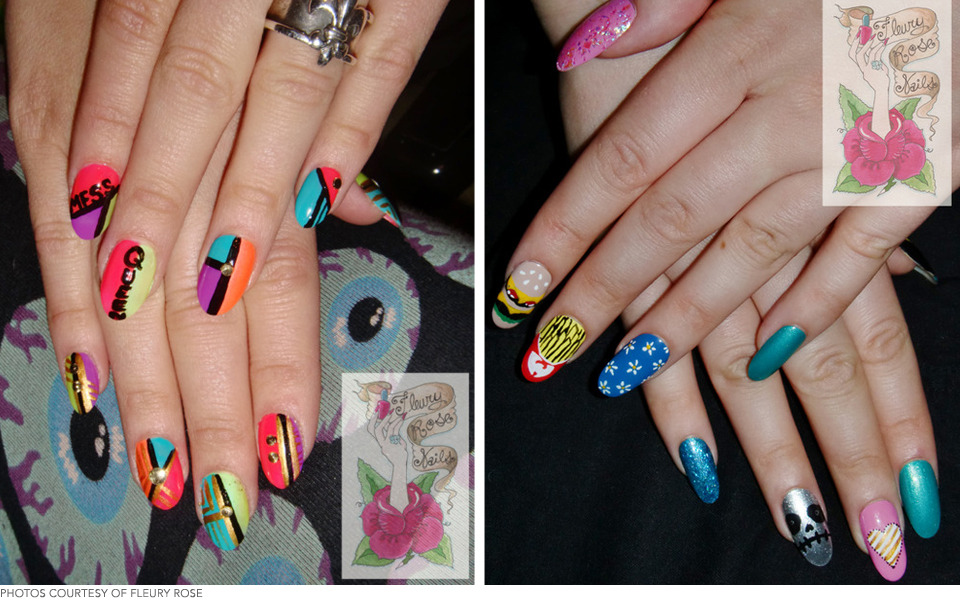
NYC-based nail artist Fleury Rose is one of the chosen souls making a name for herself as a pro. "Fresh, original, bad ass nails for the people!" is how the manicure maven describes her art form—hyper-stylized designs that rival any gallery canvas. Clearly we're into this new generation of nail artists (you read our interview with The Illustrated Nail, right?), but Fleury's bubbling personality, impeccable eye for detail, and addictive Tumblr have crowned her local legend—both in the high fashion world, and at the Brooklyn-based Tomahawk Salon where she plays resident nail guru. Among a flurry of editorials, her work has appeared in Vogue, Teen Vogue, Paper Mag, and Seventeen—Fleury's hand print is all over the scene. To top it off, she was serendipitously tapped by British brand Illamasqua as their official U.S. nail ambassador, a brand known for their heavy innovation and unabashed creativity. We chatted with Fleury about the new collaboration, which environment she prefers to work in most, and how she really perfects all those near-impossible fine lines.
B: How did you decide nail art was the career path for you?
I didn't decide on it, it decided on me! I never could have dreamed that I would be able to have such a fun and creatively fulfilling career. Nail art allows me to work in fashion, art, and beauty, which is simply amazing. There is a style of design that suits every person, it's not just crystals, glitter,and 3D bows—although those can be pretty awesome too!
B: Do you think a fine art background is necessary to succeed in this industry?
For me, having a fine art background has enabled me to understand and see color very well. It has also given me a very creative drive to do new designs and try new techniques. I've been drawing since before I can remember. My brother and I used to draw comics about our guinea pigs when I was five!
B: Who are you obsessing over the moment?
Right now I am obsessed with Juria [Nakagawa], a teenage japanese street style icon.

B: Do you like to work with any particular patterns or motifs?
I really love doing anything illustrative and cute. The day of the dead nails I did recently are definitely a good example!
B: Do you get requests for certain designs more than others?
My clients bring me amazing requests so I don't do a ton of repeat designs. I see that ombré nails are still going strong, and are popular in the salon and for DIYers. There are so many color combos—it's hard to choose one!
B: What’s the design process when a client comes in for nail art?
I always do a consultation with a client who comes in for nail art. I encourage people to bring in as much inspiration as they like, be it fabric swatches, photos, or drawings. Once we establish the overall look of the nails they want, I take my artistic license and create something one of a kind.

B: Let’s not forget the amazing news—you were recently appointed by Illamasqua's as their U.S. nail ambassador! What went into making this happen?
I have been a fan of the brand since seeing them at Sephora for the first time. I always noticed that they had amazing colors, beautiful nail varnishes, and rad nail art on their displays. I actually always dreamed that someday I would be creating nail art for Illamasqua, so when I got the call to come in and speak with the brand I was ecstatic! We had a pretty long interview process, but when all was decided it really did feel like a dream come true.
B: How will you work with Illamasqua specifically?
As the brand ambassador I will be working closely with the Illamasqua team here and in the UK to create tutorials, do events, and get the word out about this amazing British brand! I'm really happy to be working with such a high quality product. A lot of love has gone into developing it.
B: In case we want our digits done, you’ll still be at Tomahawk salon in Brooklyn too, right?
I will still be at Tomahawk as well—I love my clients and our awesome salon! The atmosphere is really chill, which is great because i am a pretty laid back person at heart.

B: That said, do you prefer the more relaxed environment of the salon, or the high pace of an editorial shoot?
They are very different. I am really glad to have the opportunity to do both, because it keeps things interesting. I love the excitement of a photo shoot—working with other artists, and getting to see the beautiful pictures when the magazine gets published. On the other hand, I love working at Tomahawk because I get to see my private clients who let me do my thing, and get really intricate, which I often don't get the luxury of doing on set. I also love the salon because all the girls who work there are amazing and talented, and the owner Chantal Savaresse is a dear friend. It's so inspiring to be around other creative women!
B: Now spill, which tools do you use to master the details?
Illamasqua makes these amazing Precision Inks. It has a very tiny brush, and dries very quick. I also use a lot of acrylic paints. Tiny brushes are essential too. I buy mine from the art store.

Stop Biting Your Nails Now!

Related Articles:- Hair Beauty Tip Long Wavy Hairstyles: 

                               How to grow hair back

                               The Secrets to Beautiful Skin ...

Saturday, September 1, 2012

Hair Beauty Tip Long Wavy Hairstyles: Have Them Naturally

What do Jennifer Lopez, Kate Hudson, and Rachel Bilson have in common? Besides their A-rate Hollywood status, beautiful face, they also sport long wavy hairstyles, which definitely looks great and help bring out their beauty. It’s no wonder, therefore, that you also dream one for yourself. A long wavy hair is always well loved because it has more volume and body, soft to the eyes, flowing, and free. It doesn’t require a lot of maintenance unlike straight hair.
The good news is that you don’t need to be naturally born with it. There are already a number of ways on how you can achieve a long wavy hairstyle.
But before we proceed to the techniques, there’s something you should know. These suggestions are devoid of any hot appliances such as curling irons. Some women would depend on these devices to achieve a little curl here and there on their hair. Though they are effective and can give you the look in a matter of minutes, they are not healthy at all. The intense heat they produce can dry the hair up, leaving you with brittle, dull, or even frizzed hair.
Here are the things you can do instead:
Choose your conditioner very well. The first step to getting a long wavy hairstyle is to actually shampoo and condition your hair. Now, it’s very important that you get picky with the latter. As much as possible, you should pick the lightweight one because you don’t want to weigh your hair down. You want them to be very easy to control and manage.
You can also use the leave-in or anti-frizz hair conditioners. After taking a bath, remove the excess water from the strands and wrap your entire head with a towel. Wait for around 15 minutes to an hour. After the designated time has elapsed, you can now remove the cloth and allow natural wind to completely make it dry. This step is easy, no fuss, and can give you a bouncy wavy hair that’s natural looking.
Apply a volumizing formula. While your hair is not too damp or too dry, you can apply a conditioning mousse on your hair to ensure that you can conveniently twist or curl it. After you’ve accomplished this, you can then spray your volumizing formula. One of its jobs is to also ensure that your wave stays all throughout the day.
A little word of caution, though: avoid becoming enthusiastic on the mousse. Too much of it can also make your hair very heavy to easily manage.
Wear the rollers. It will definitely take some time to obtain a wavy hair with the rollers, but they are a lot healthier and safer. The size of your rollers will depend on the kind of wave you want to achieve. While they are still on, you can spray your styling spray at least half of the rolled hair to make sure they hold properly once you remove the rollers. You can find more hairstyles for women here.
If you are in the mood to spice up your lovely locks, be sure to visit the one-of-a-kind art glass hair jewelry at longlocks.com.